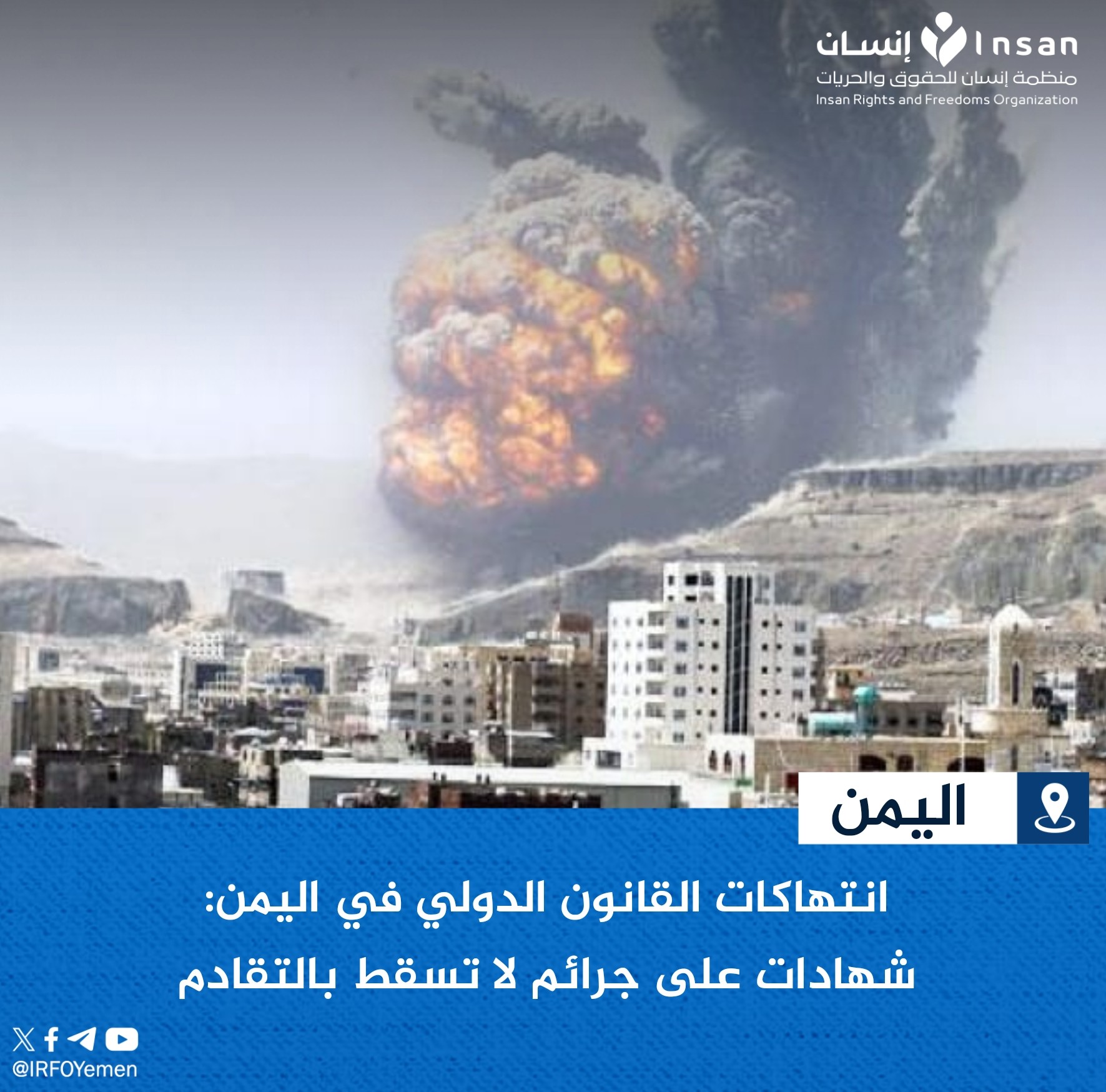
The coalition’s military operations against Yemen began on March 26, 2015, opening a tragic chapter of humanitarian suffering that affected civilians and infrastructure across the country.
Throughout that year and the years that followed, bloody incidents were recorded, leaving deep and lasting آثار that continue to this day, amid ongoing calls for accountability and justice.
First: The Bani Hawat Tragedy – Sana’a
On the first night of the war’s announcement on Yemen, Al-Noor neighborhood in the Bani Hawat area, east of Sana’a International Airport, was subjected to airstrikes targeting a densely populated residential area.
These attacks resulted in the killing of 29 civilians, including 15 children, and the injury of 43 others, most of them women and children.
This incident reflects a blatant violation of the principles of international humanitarian law, which stipulate the protection of civilians during armed conflicts.
This tragedy remains present in the collective memory, with its reality unchanged and justice yet to be achieved for its victims.
Second: The Faj Attan Bombing – Sana’a
In 2015, neighborhoods in Faj Attan were struck by an air raid using an internationally prohibited bomb, leading to one of the most severe humanitarian disasters in the capital.
The number of victims exceeded 120 killed and 800 injured, while the destruction extended over an area of approximately 3 square kilometers.
Around 700 homes and facilities were damaged, more than 200 vehicles were destroyed, and nearly 80% of residents were displaced.
This incident is classified as a grave war crime due to the scale of human and material losses and its widespread impact on civilians.
Third: Targeting the Residential Complex in Al-Mokha
In mid-2015, airstrikes targeted a residential complex in the city of Al-Mokha.
The attack resulted in the killing of 65 civilians, including 13 children and 12 women, and the injury of 36 others, including 14 children and 13 women.
The targeting of a vital civilian facility and a residential complex indicates a pattern of attacks on infrastructure, contributing to the worsening humanitarian crisis.
Fourth: Bombing of the Central Security Headquarters – Sana’a
In an apparent attempt to create chaos, two coalition airstrikes targeted the Central Security headquarters in Sana’a, resulting in the killing of 58 security personnel and the injury of 288 others.
This incident caused significant human losses and raised widespread concerns about the safety of civilians in areas surrounding targeted sites.
Fifth: Targeting the Education Sector
The impact of the coalition war on Yemen was not limited to loss of life but extended to the education sector, which suffered severe damage.
Estimates indicate that more than 3,500 schools in Yemen were destroyed or damaged.
Additionally, 27% of schools were closed, 66% were damaged, and 7% were converted into shelters for displaced persons.
This has deprived millions of Yemeni children of their right to education, threatening the future of an entire generation.
These incidents reveal the scale of humanitarian suffering experienced by Yemen since the beginning of the coalition war led by Saudi Arabia and the UAE, with U.S. and Israeli support, in early 2015. Attacks on civilians and vital infrastructure have been repeated, constituting a clear violation of international humanitarian law.
There remains an urgent need for independent investigations, accountability for those responsible, and guarantees that perpetrators of these violations do not escape punishment, in addition to ensuring the protection of civilians and supporting recovery and reconstruction efforts.