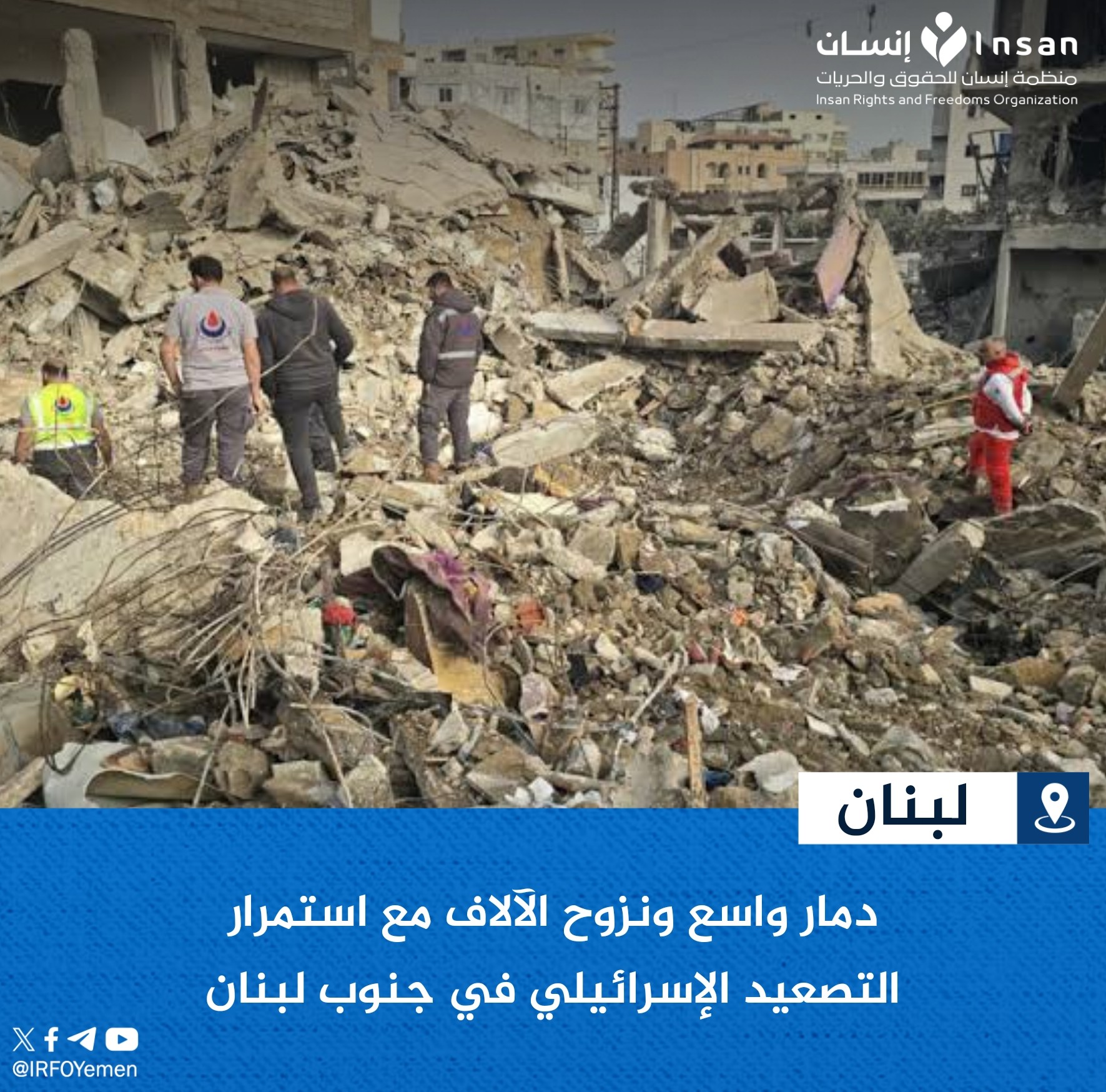
For more than a month, southern Lebanon has been under continuous Israeli bombardment, leaving widespread destruction in infrastructure and turning civilians’ lives into a daily struggle for survival, amid growing fears of a worsening humanitarian crisis.
In a sign of escalating Israeli military violations, the number of civilian casualties in Lebanon has risen to 1,530 killed and 4,812 injured since March 2, according to the Lebanese Ministry of Health in a statement issued in recent hours.
Regarding infrastructure, in villages stretching south of the Litani River, bridges are no longer مجرد routes connecting people to their livelihoods or essential services; they have become direct targets of Israeli airstrikes.
The destruction of these bridges has led to the isolation of entire areas and the disruption of supply routes, making it difficult to deliver food and medicine, and imposing harsh conditions on residents.
Israeli strikes have not been limited to roads and bridges, but have also targeted residential buildings, with dozens of homes destroyed over the heads of their inhabitants or forcing them to flee.
As the attacks intensified, widespread evacuation orders were issued, forcing hundreds of thousands to flee, leaving everything behind.
In this context, the international organization Oxfam warned of the increasing targeting of vital infrastructure, particularly water facilities.
It noted that strikes on these facilities—including those under repair—threaten to deprive tens of thousands of people of clean water.
The organization also confirmed that its teams are currently unable to access many of the affected sites due to the intensity of the bombardment, further complicating efforts to assess or repair the damage.
With water and electricity networks damaged, entire villages are now living without basic services.
Under international humanitarian law, including the Geneva Conventions, targeting civilian facilities and infrastructure essential for the survival of the population is prohibited.
The use of water deprivation as a method of warfare also constitutes a serious violation that may amount to a war crime.
Amid this reality, fears are growing of a broader humanitarian catastrophe, as displaced people face harsh conditions, with shortages of shelter and healthcare services, and increasing risks linked to water contamination and the spread of diseases.
As the Israeli escalation continues, civilians in southern Lebanon remain the most vulnerable, caught between bombardment and displacement, awaiting any relief that might restore a minimum level of safety and normal life.