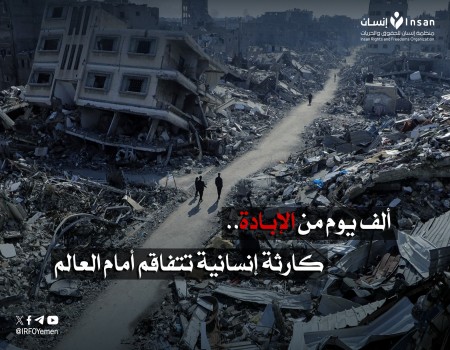
Days in the Gaza Strip are no longer measured by the ordinary calendar, but by the scale of loss and destruction. One thousand days after the outbreak of the genocidal war, the lives of more than two million Palestinians have become a daily struggle against death, hunger, and displacement, amid one of the worst humanitarian disasters of the modern era.
During this period, nearly 90% of the Strip’s infrastructure and resources have been destroyed after Israeli occupation forces dropped more than 223,000 tons of explosives on densely populated areas, leaving behind unprecedented scenes of devastation. The human toll has been catastrophic, with 73,066 martyrs brought to hospitals, while 9,500 people remain missing under the rubble or in areas inaccessible to rescue teams.
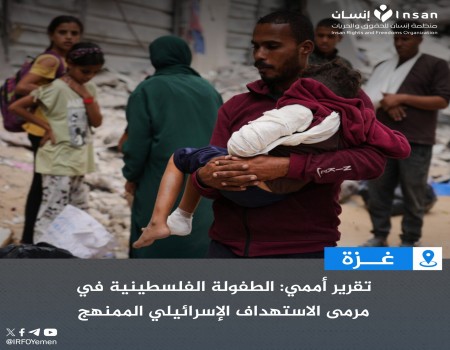
Children and women have been at the heart of the tragedy. More than 21,500 children and 12,500 women have been killed, while 2,700 entire families were erased from the civil registry after all family members were exterminated — a scene that reflects the magnitude of the catastrophe endured by Palestinians.
The targeting was not limited to civilians; it also extended to the healthcare sector, which has suffered near-total collapse. Thirty-eight hospitals have gone out of service, and 1,700 medical personnel have been killed. Meanwhile, the number of wounded and injured has exceeded 173,514, while 22,000 patients and wounded individuals have been prevented from leaving the Strip for treatment despite their urgent need for medical care.
In displacement centers, the tragedy continues to deepen, with more than 2.1 million recorded cases of infectious diseases among nearly two million displaced people, most of whom are living in 132,000 deteriorating tents no longer fit for habitation, amid the absence of even the most basic necessities of life.
Starvation has also been turned into a weapon of war, with border crossings remaining closed for more than 670 days. This has placed 650,000 children at risk of death from malnutrition and left 58,800 children orphaned after losing one or both parents, in one of the cruelest consequences of the war.
Education, too, has not been spared from the machinery of destruction. One hundred percent of schools have been totally or partially targeted, depriving more than 620,000 students of their right to education, while 20,051 students have been killed during the aggression.
The destruction has also extended to infrastructure and the basic foundations of life. Around 410,000 buildings and housing units have been destroyed or rendered uninhabitable, more than 5,080 kilometers of electricity networks have been devastated, and 1,047 mosques have been leveled to the ground. Even cemeteries were not spared, with reports documenting the exhumation and theft of 2,450 bodies.
In the agricultural sector, 87% of farmland has been destroyed, deepening the food security crisis, while preliminary direct losses have exceeded 80 billion US dollars. Yet the war continues, and the people of Gaza remain trapped between death, hunger, and displacement, amid international failure to stop one of the most painful humanitarian tragedies in modern history.