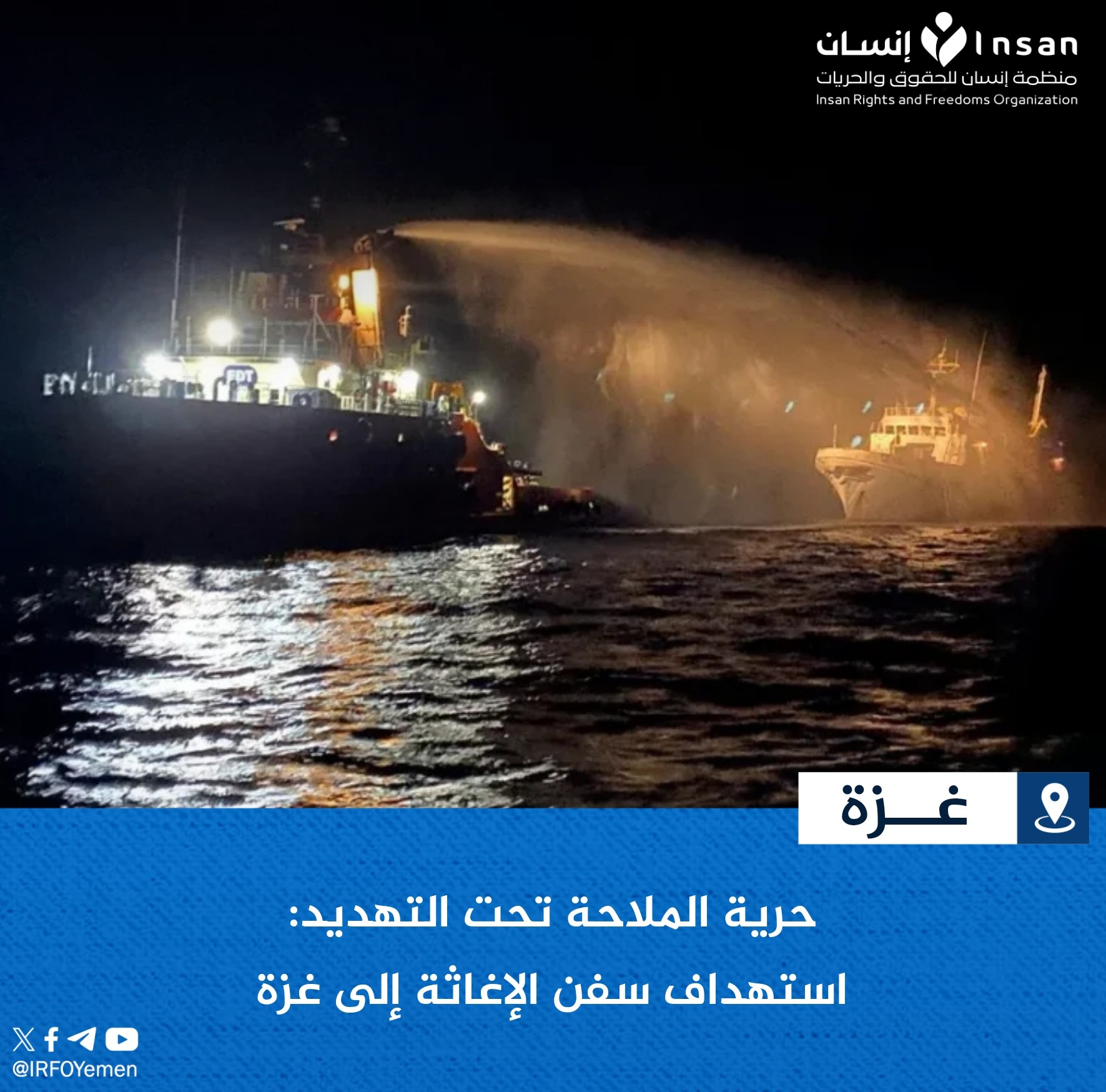
As the humanitarian crisis in the Gaza Strip continues, activists from around the world are pressing ahead with efforts to save civilians and deliver humanitarian assistance, despite the grave risks threatening their lives.
These efforts come as part of humanitarian initiatives aimed at breaking the blockade imposed on the territory, which continues to suffer from worsening humanitarian conditions.
In this context, the "Global Steadfastness Flotilla" faced repeated interception attempts during its second mission, with reports indicating that Israeli naval forces have seized around 15 vessels so far.
Attacks were also reported against several ships near the island of Crete, raising widespread international concern.
According to testimonies and human rights sources, Israeli forces intercepted civilian vessels carrying medicine and medical aid at an estimated distance of about 1,000 kilometers from the Gaza Strip, within international waters.
This action has been widely regarded as a clear violation of international law and freedom of navigation.
Several human rights organizations condemned the attack, describing what occurred as an "act of piracy" inconsistent with international conventions.
These organizations stated that they are closely monitoring the condition of those participating in the flotilla and coordinating with relevant parties to ensure their safety and take the necessary measures to protect them.
The flotilla reportedly consists of around 100 boats carrying nearly 1,000 activists from 39 countries. It was heading toward the Gaza Strip with the aim of delivering humanitarian aid and breaking the blockade imposed on the civilian population.
These developments once again reflect Israel’s ongoing approach of defying international will and legal conventions that guarantee the protection of civilians and freedom of navigation.
This comes amid growing global criticism, as rights groups believe such violations reinforce a climate of impunity and place the international community before its responsibility to take a firm stance that ensures an end to these practices and guarantees the unhindered delivery of humanitarian assistance.